
The Timeline to Launch a Business in Dubai

The timeline for launching a business in Dubai depends on your chosen business activity, structure, and location; however, with proper guidance, it can be faster than expected. Whether establishing a small business or a large company, Dubai boasts a smooth and efficient business climate that attracts entrepreneurs from around the world. At Recordac Accounting and Consulting Services in Dubai, we help aspiring business owners move from concept to company formation in record time. Are you ready to bring your business idea to life? You can begin the journey by hiring an expert. Understanding the Basics of Starting a Business in Dubai Establishing a business in Dubai involves several key steps. These may differ depending on whether a mainland or a free zone structure is adopted. However, the timeline for launching a business in Dubai typically follows a predictable pattern when handled professionally. Step 1: Business Planning and Market Research (1–3 Days) You should prepare a sound plan before entering into any legal procedures. Specify your line of business, target customer, and competitors. Conducting a thorough feasibility study helps you avoid mistakes and expedite the licensing process. At this initial stage, you also choose your business structure, e.g., sole proprietorship, limited liability company (LLC), or branch office. Such decisions have an impact on schedules and reporting conditions. Step 2: Trade Name Registration (1–2 Days) Then, you would register a new trade name with the Department of Economic Development (DED) or another free zone regulator. Your trade name should accurately reflect your activity and comply with the UAE’s rules on naming. Name approval is fast, but in the event of a rejection (because of duplication or guideline reasons), delays may occur. Hence, it is prudent to have alternative name choices. Step 3: Initial Approval from Authorities (2–5 Days) First approval implies that the government of the UAE has no objections to your business setup. This action helps to open the gateway to the legal process. For mainland businesses, processing is handled by the DED. In the case of free zone companies, this is dealt with by the respective authority. The positive news is? This permission is typically granted within 48 hours, provided proper documentation is submitted. Step 4: Drafting and Notarizing Legal Documents (2–3 Days) The agreement of the memorandum of association (MOA) or local services agent (LSA) should be written and notarized. You will need to take this legal action depending on your business structure. In the case of LLCs, the signing and preparation of the MOA is a necessity among all partners. To ensure that there are no setbacks, make sure that all documentation is similar to what you submitted the first time. Using lawyers or business start-up professionals will significantly mitigate mistakes at this step. Step 5: Renting Office Space and Finalizing Location (1–3 Days) You will have to provide evidence of an operating business address in Dubai to complete your registration. This may be a virtual office, a physical office, or even a flexi-desk; it can vary according to the type of business and licensing authority. There are free zones that provide workspace, and licensing is bundled in packages. These packages can reduce your countdown to start a business in Dubai by days. Step 6: License Issuance and Payment (2–5 Days) Once every document has been submitted and checked, and payment has been received, the license will be issued. This is the official beginning of your company in Dubai. Time in this case may vary depending on the type of license you have and the nature of your business activity. The duration of mainland licenses is 3 to 5 working days, and most free zones can issue them in 48 hours. Step 7: Visa Applications and Establishment Card (5–10 Days) After licensing, you’ll need to apply for: There are long delays due to visa procedures, which can add a week or more to your schedule. Nonetheless, this phase can be reduced by early application and the preparation of documents in advance. How Long Does It All Take? In summary, the timeline for launching a business in Dubai typically ranges from 7 to 21 working days when handled professionally. Here’s a quick breakdown: Of course, delays can happen if paperwork is incomplete or compliance rules are not followed. That’s why working with experienced professionals is key. Final Thoughts Dubai is one of the easiest places in the world to establish a business, but only when you know what to do and are organized. With proper guidance, the timeline for launching a company in Dubai can be significantly shortened. Recordac Accounting and Consulting Services in Dubai simplifies this process. Whether it’s trade name approval or visa services, we will make your journey of establishing your business quicker. Are you out to bring your idea into business? We are going to open your business in Dubai quickly, legally, and efficiently.
How to Open a Business Bank Account in the UAE?

One of the most significant moves that any company intending to conduct business in the region should consider is opening a business bank account in the UAE. Whether you’re setting up a local company or launching a free zone business, understanding how to open a business bank account in the UAE is essential for managing your finances professionally and legally. For entrepreneurs and startups looking to simplify the process, Recordac Accounting and Consulting Services in Dubai offers expert support tailored to UAE banking regulations. Then you are all set to open your account in the UAE without the wrangle. Let the process be easy and stress-free with Recordac. Call today to discuss your situation. Why a Business Bank Account is Essential in the UAE It is almost impossible to run a business in the UAE without a corporate bank account. This is not about managing money, first of all, you can: Furthermore, the UAE Central Bank mandates that every company registered to carry out business activities maintain a corporate account, facilitating clarity and adherence to anti-money laundering regulations. Step-by-Step Guide: How to Open a Business Bank Account in the UAE Establishing a business bank account in the UAE can be complicated, especially for an expat or someone starting a business for the first time. Nonetheless, it becomes easy when it is simplified into simple steps. Step 1: Choose the Right Bank When exploring how to open a business bank account in the UAE, your first decision will be selecting the right bank. The UAE offers banking services to both local and international banks. Different banks have various requirements and packages. Others specialize in large corporations, whereas some are more suitable for startups. Select a bank that suits your business model, transaction requirements, and requires access to international markets. Step 2: Understand Account Types and Fees The UAE banks provide two types of accounts: savings accounts, which are used to hold long-term funds, and current accounts, which allow for conducting daily business transactions. Take note of the following with close attention: Being aware of this information can help you avoid unwanted charges and maintain a good relationship with your bank. Step 3: Prepare All Required Documents To open a business bank account, one should have a package of necessary documents before commencing business in the UAE. These are normally: Ensure that all documents are recent and duly certified, as needed. The most significant problems associated with the delays in bank applications are errors or a lack of documentation. Step 4: Attend a Bank Interview (If Required) It will be required to visit multiple banks to open an account. This is a standard procedure for opening a business bank account in the UAE, particularly for foreign-owned companies. The bank will normally enquire concerning: Be open and ready to satisfy these inquiries. This helps build a rapport, which accelerates the approval process. Step 5: Account Approval and Activation After verifying your documents and examining your application, the bank will open an account for you, generally within 7-20 working days. Your next step will be to get your: Here, your business account in the UAE is now fully operational, allowing you to operate efficiently and legally. Common Challenges and How to Avoid Them You may have to wait before opening a business bank account in the UAE because you do not know what some of the significant pitfalls entail, which include: To avoid these problems, always consult professionals who understand UAE financial regulations, such as Recordac Accounting and Consulting Services in Dubai, which offer personalized support for smooth bank account setups. Final Thoughts Understanding how to open a business bank account in the UAE is a key milestone for entrepreneurs launching their ventures in this thriving economy. Whether it is picking the correct bank to do business with or the right kind of documentation, it is all important in the long run. Want to set up your business bank account in the UAE with the assistance of specialists? Call Recordac today and have their team do the work, start to finish.
Do You Need a Local Sponsor? Understanding UAE Law

Do you need a local sponsor? Understanding UAE law is crucial for anyone planning to start a business in the United Arab Emirates. This is the first question that comes to mind if you want to establish a company, particularly on the mainland. For expert support throughout the process, Recordac Accounting and Consulting Services in Dubai is here to guide you every step of the way. Contact us today to schedule a complimentary consultation. The UAE has become a successful example of what international business professionals strive for, with its stable economy, friendly policies towards investors, and a globally recognized infrastructure. However, before starting your dream business, you must be aware of whether you need a local sponsor, depending on the nature of your business and your location. What Is a Local Sponsor in UAE? According to UAE law, the local sponsor is a UAE native and the type of UAE national (people of the UAE land) who is a partner or a service agent in your business establishment. However, this does not imply that they dictate how you conduct your business. The local sponsor is typically charged an annual fee and has no direct involvement in management. When Do You Need a Local Sponsor? Can you use a local sponsor? Being aware of UAE law, you make decisions based on the type of business and its location. So here is a brief reference: You may also require a local sponsor to establish a business on the mainland. More activities, however, are permitted to be owned by 100% foreign ownership, especially in areas such as technology, education, manufacturing, and health, through a recent amendment to the UAE Commercial Companies Law. However, this is still subject to the particular activity as listed by the Department of Economic Development (DED). However, you may not require the full local partner, particularly if your business is professional, such as a consultancy, law firm, engineering firm, or medical practice. Instead, a Local Service Agent (LSA) will be needed. The shares are not owned, and LSA does not disrupt the operations, but must remain legally obligated to access licenses. If you decide to establish your business in one of the numerous UAE free zones, you do not need a local sponsor. You will enjoy tax exemptions, simplified import/export procedures, and own everything, becoming a 100 percent owner. Benefits of Having a Local Sponsor Even though the rules are lenient, there are still cases when a local sponsor is useful. Here’s why: Risks and Considerations When asking, ‘Do you need a local sponsor?’ understanding UAE law also means recognizing the potential risks associated with it. Selecting an incorrect sponsor may lead to legal issues or unexpected expenses. Ensure you: Changes in UAE Law You Should Know To attract more foreign investments, the government of the UAE has significantly eased ownership laws. More than 1,000 business activities have been subject to 100% foreign ownership since 2020, without requiring local sponsorship, encompassing various sectors. This law is not blanket, and there are still highly regulated sectors, such as defense, oil and gas, and banks, which are still considered to require a local Saudi partner. Additionally, the implementation of these laws may vary slightly in each emirate; therefore, it is essential to employ a country lawyer or lawyers. How to Choose the Right Setup The choice of the proper legal structure is an answer to the question of: The answers you provide will determine whether you require a local sponsor or not. In cases of doubt, it is advisable to consult a professional for guidance. Final Thoughts Can you use a local sponsor? To establish a successful business in the Emirates, it is essential to understand the local laws. Due to the changing regulations, foreign investors have become more flexible and have more freedom to own. Yet not every size fit everyone. Depending on your industry, location, and business objectives, your legal needs are determined. For personalized guidance and seamless company formation, Recordac Accounting and Consulting Services in Dubai is your trusted partner. Contact us now and bring your business to life. Ready to set up your business in the UAE? Whether you need a local sponsor or not, Recordac is here to simplify the process.
Financial Reports Every Founder Should Understand

Financial Reports Every Founder Should Understand are the foundation of every successful business decision. To founders, these reports are not mere numbers; they are key to gaining insight into the well-being of your company, making wise decisions, and finding investors. Bootstrap or grow at a blistering pace. If you’re a startup founder in Dubai, working with a team like Recordac Accounting and Consulting Services can simplify your financial reporting and keep you focused on what matters most—growing your business. Let’s dive into the essential reports every founder needs to know. The profit and loss (P&L) statement, which can also be called the income statement, will display how much money your company earned, how much it spent, and how much it made during a specific period. This report helps you address a critical question: Are we spending money or losing it? As a founder, you are expected to be familiar with every line of your income statement, specifically your gross profit, operating expenses, and net income. Observing these trends over a period helps you identify points where you can make a cost cut or generate more revenue. The balance sheet provides a snapshot of your company’s financial position at any given point in time. It decomposes your assets, liabilities, and equity. This report is necessary since it informs you of how much you own compared to what you owe in your business. It also reveals the amount of unrestricted cash held in the inventory or accounts receivable. The balance sheet helps investors and lenders determine a company’s solvency and overall financial position. The cash flow statement monitors all in-flow and out-flow of cash into your business. Companies can go out of business even when they are profitable, provided they lack sufficient cash. There are three sections in this report: It is essential to have a clear understanding of your cash flow to effectively budget, manage payroll, pay suppliers, and maintain financial stability. Every startup runs on cash flow, which founders should understand down to a monthly or even weekly level. Many founders often ignore the statement of retained earnings, yet it is so helpful. The report indicates the amount retained in the business rather than the dividend paid to shareholders. This is where you will see it reflected, for example, in the case of reinvesting to scale. An understanding of retained earnings can help determine how much money you want or need to allocate to future profits and whether your funds are sufficient to handle expansion or unexpected emergencies. The day a founder finally reaches a break-even point is a dream. A break-even analysis helps you determine when your business will cover all its expenses. It adds information to your income statement and cost structure to identify the revenue level at which you have identical expense and revenue levels. When operating a new business, this report will help you set achievable objectives and develop effective pricing models. It also provides a clear benchmark for how much you will need to sell to avoid incurring a loss. This comparison report presents your actual financial performance and your budget. It should be a reality check for the founders. Do you tend to overspend? Were your sales as expected? This report should be used to make real-time corrections in the course. By regularly reviewing their budget against the actual report, founders will be able to make quick adjustments before minor issues become significant problems. Why Understanding These Reports Matters Financial Reports Every Founder Should Understand aren’t just about compliance—they’re about control. In case you comprehend those reports, you may: Knowing about these reports enables you to guide rather than deal with guesswork. Final Thoughts Operating a business in the dark on your financial statements is similar to driving with a blindfold. Those who learn how to work with these documents are more intelligent in their decision-making and less likely to make mistakes. For those in Dubai and beyond, Recordac Accounting and Consulting Services provides expert support in financial reporting, enabling founders to decode the numbers and focus on business growth. Are you willing to become financially clear and in control? Contact Recordac immediately and start making better decisions sooner and more efficiently.
The Benefits of Automating Your Bookkeeping

The benefits of automating your bookkeeping are becoming clear for businesses of all sizes, especially in a fast-paced financial hub like Dubai. Manual applications may be late, inaccurate, and ineffective. That is why companies are moving towards digital bookkeeping solutions to facilitate financial management, save time, and reduce stress. If you’re a business owner seeking more control over your finances, Recordac Accounting and Consulting Services in Dubai can help you get started with automation. Want more time to focus on growth? Automate your bookkeeping with Recordac today. One of the most significant advantages of automating your bookkeeping process is the time savings it provides. The old bookkeeping systems include cumbersome data entry, physical documentation, and manual calculations. Using automation, this is done by the software on your behalf. Automation tools are used instead of hours spent reconciling bank statements or entering invoices; they take real-time care of the matter. This allows business owners and accountants to shift their focus to strategy, planning, and customer service. You no longer have to end your working day immersed in spreadsheets. The benefits of automating your bookkeeping go beyond saving time—it significantly lowers the risk of human error. Manual entry is prone to errors, including keying incorrect amounts and misplaced decimal points. Automation tools analyze rules and calculations that they are programmed to do. They minimize the risk of failure to make entries or make duplications. The result is clean records, improved accuracy, and reliable financial statements. The other primary benefit of automating your bookkeeping is the availability of real-time information. Automated programs are synchronized with your bank account, as well as invoices and receipts. This implies that you can view your current financial status at any time. You no longer need to wait until the end of the month to find out where your business is. These tips are used to make informed decisions, whether managing cash flow, tracking expenses, or identifying ways to grow. The tax season doesn’t have to be a daunting phenomenon. The ease of tax preparation is one of the undervalued advantages of automating your bookkeeping. You don’t have to spend your time searching for receipts and logs because your records are up to date-and organized at the highest level. There is also the opportunity to group the costs and mark deductible items to ensure the tax benefit does not disappear. This eases the work of your accountant and minimizes the risk of penalties arising from poor reporting. Your business is expanding, and your financial reports are becoming more complicated. Bookkeeping automation also allows you to scale up your accounting systems, as it handles an increased volume of information easily. You do not need to hire additional staff to handle the books. Managing both systems requires the proper software to keep you running as you grow. Automation will make your operations lean and stay in control of your finances. Documents in paper format can be destroyed, stolen, and lost. Enhanced data security is a primary advantage of automating your bookkeeping. Most contemporary bookkeeping software also provides cloud storage options and encrypted servers to ensure the security of sensitive information. Local laws are also enforced through automation. In-built tools may prompt you to document filing deadlines, VAT, or financial audits. This is particularly critical for businesses in Dubai, as compliance with the UAE tax rules is paramount. Although there is an upfront cost associated with automating systems, the saved expenditure is essentially cumulative in value. You reduce labor, mistakes, and late charges. You can also increase efficiency within your finance department. Automating your bookkeeping may be a self-maintaining cost during the first year. Contemporary, current records assist you in forecasting. With automated bookkeeping, you gain insight into income trends, expense trends, and cash balances. The information will enable superior budgeting, forecasting, and objective setting. You do not need to guess. With the help of data, you can now use it to make your next step. It results in a more confident decision-making process and sustainable development of the business. Final Thoughts The benefits of automating your bookkeeping are clear: it saves time, improves accuracy, supports scalability, and enables smarter financial decisions. Driven by virtualization, Dubai businesses that apply digital transformation no longer have a choice but to switch to automated bookkeeping, as it will be a significant business move rather than a smart one. Take the first step toward financial clarity—connect with Recordac Accounting and Consulting Services in Dubai and experience the power of automated bookkeeping.
Choosing Between In-House and Outsourced Bookkeeping
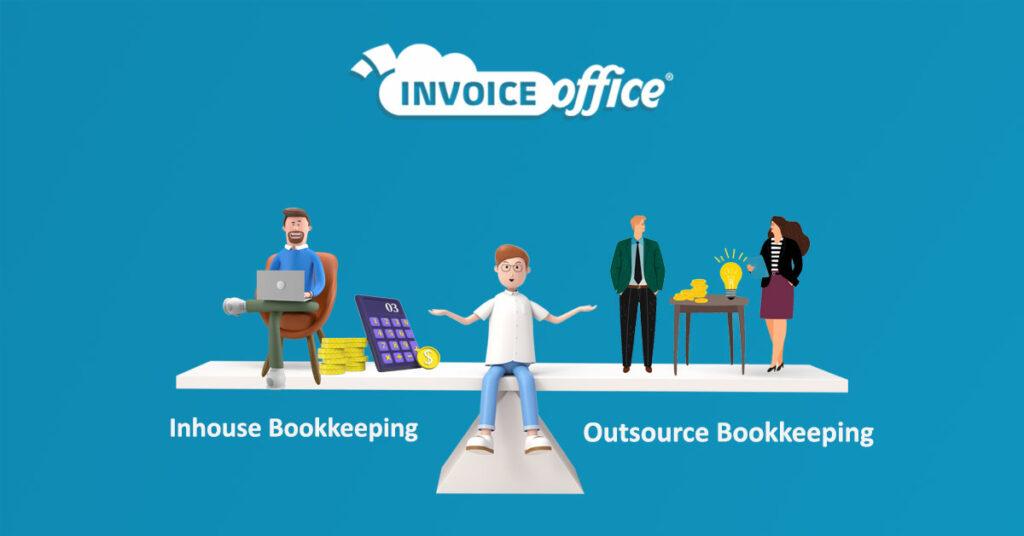
Choosing between in-house and outsourced bookkeeping is a significant decision that can significantly impact how efficiently your business operates. As a small startup or developing business in Dubai, it is essential to make informed decisions regarding the bookkeeping aspect of your company’s financial health and sustainability. At Recordac Accounting and Consulting Services in Dubai, we help business owners navigate this choice with clarity and confidence. Prepared to streamline your money? We will know what fits your business. Understanding the Core Differences In in-house vs. outsourced bookkeeping, it’s essential to understand how each model operates. In-house bookkeeping involves hiring an employee or a group of employees to manage your company’s books on-site. They can manage your financial documents, process transactions, and ensure everything is in order, all within your office. Alternatively, you can engage in outsourced bookkeeping, whereby you entrust such duties to a third party or service provider. These specialists operate offsite yet provide reliable and accurate bookkeeping services in real time via cloud-based, secure systems. Pros of In-House Bookkeeping An in-house bookkeeping option has its advantages, particularly for companies that exercise greater control over their financial processes. However, in-house bookkeeping is associated with increased costs. You will be required to pay salaries, training, software, and benefits, which can quickly add up. Benefits of Outsourced Bookkeeping Due to the cost-effectiveness and flexibility considerations, more companies in Dubai have chosen to outsource their bookkeeping solutions. Here’s why: Outsourcing also minimizes fraud and helps businesses comply with tax codes and rules. Which Option Is Best for Your Business? Choosing between in-house and outsourced bookkeeping depends on several factors, including your budget, business size, and the complexity of your financial transactions. Nevertheless, the benefits of outsourcing sometimes allow many businesses to develop a degree of flexibility and expertise that is difficult to achieve internally. Key Considerations Before You Decide In weighing the costs of in-house and outsourced bookkeeping, ask yourself the following questions: These answers will direct you to a configuration that meets your needs without overstretching. Why Dubai Businesses Are Outsourcing More Than Ever With the busy business culture in Dubai, outsourcing bookkeeping is gaining popularity. Strict policies, tax requirements, and stiff competition are also making business owners aware that outsourced bookkeeping provides both accuracy and peace of mind that may not be evident when using in-house personnel. Service providers like Recordac Accounting and Consulting Services offer tailored solutions that help you stay organized, compliant, and focused on growth. Final Thoughts In-house bookkeeping or outsourced bookkeeping is not a one-size-fits-all decision. It depends on your business intentions, finances, and the level of control you desire. However, when it comes to a low-cost, tried-and-true, and professional solution, outsourcing is a better option. By working with a trusted provider like Recordac Accounting and Consulting Services in Dubai, you can free up your time, reduce costs, and ensure your books are always in good hands. Interested in securing better efficiency in your finances? Enquire with Recordac now and discover how outsourced bookkeeping can help propel your business to new heights.
What to Expect in Your First CFO Service Meeting?

What to Expect in Your First CFO Service Meeting is something every business owner should know before stepping into the room. As a startup founder or the head of a growing business, the annual financial clarity and planning meeting is here to establish a financial tone and a strategic direction. If you’re working with Recordac Accounting and Consulting Services in Dubai, you can expect a professional, detail-oriented approach from the very beginning. Are you willing to take charge of your company’s finances? So, reserve your appointment now. Understanding the Purpose of the First CFO Meeting The initial CFO service meeting is more than a formal introduction. This is the opportunity to balance financial objectives, identify the potential of your systems, and create a strategic economic plan. Above all, this gathering is the beginning of the process of converting financial information into decisions. At its core, what to expect in your first CFO service meeting includes a deep dive into your company’s financial health. Look forward to a chat over your balance sheet, income statements, cash flow, and other economic areas of concern. It is not enough to crunch numbers but to get to the story behind them. Reviewing Financial Documents and Business Structure Be prepared to share and review essential financial records. These typically include: Your CFO will consider these papers to obtain a quick overview of your situation. Be prepared to be asked a lot of details, in particular, the way you generate your revenue, your cost structure, and what you have as current liabilities. Understanding what to expect in your first CFO service meeting also involves being open to honest feedback. We will refine your business structure to align it with your financial objectives, whether you are planning an investment, seeking tax savings, or managing cash flow. Identifying Opportunities and Risks Among the most significant benefits of CFO services is that they can identify unknown opportunities and unseen risks. Your CFO will inquire about your short-term and long-term aspirations, which may include becoming more profitable or accessing new markets. There will be a discussion in detail on the following: If you’re wondering what to expect in your first CFO service meeting, it’s a lot more than accounting. It is a matter of strategy. You will start seeing your numbers as something that can be used to make informed decisions rather than just as a compliance measure. Setting KPIs and Financial Benchmarks Once having reviewed your finances, the CFO will assist you in setting valuable KPIs (Key Performance Indicators). These will be your north star for gauging success. For example, you may monitor gross profit margins, customer acquisition costs, or accounts receivable turnover. What to expect in your first CFO service meeting includes collaborative goal-setting. As a takeaway, you will have financial benchmarks that relate to your business type, industry, and stage of growth. The targets will help in making daily decisions as well as in long-term planning. Creating an Action Plan At the meeting’s conclusion, you will receive a definitive action plan. Usually, this involves: You will not exit the meeting wondering what is next. The process will be organized, and your CFO will provide a step-by-step plan with distinct deadlines and responsibilities. It is based on this plan that all subsequent CFO services and meetings are based. Questions to Prepare for the First CFO Meeting If you want the meeting to be effective, come prepared to answer: Understanding what to expect in your first CFO service meeting means being ready to discuss your business openly. The more open you become, the more successful the assistance will be. Final Thoughts The initial meeting with your CFO services is the start of a strategic relationship that can transform your business. Hiring someone to track costs is not what you are paying for; you are recruiting a financial leader to help you grow, mitigate risk, and increase profitability. With Recordac Accounting and Consulting Services in Dubai, you’ll gain a clear roadmap built around your goals. So, now that you know what to expect in your first CFO service meeting, are you ready to make smarter, faster financial decisions? Plan your service with Recordac now and make the initial assured step on the road to financial wealth.
Benefits of Having a CFO on a Project Basis

The benefits of having a CFO on a project basis can be game-changing for businesses seeking to scale efficiently, manage finances effectively, and avoid the high costs associated with a full-time executive. At Recordac Accounting and Consulting Services in Dubai, we offer tailored CFO solutions that allow your business to access top-level financial expertise exactly when you need it. Want to bring your financial decision-making to the next level? Today, we will discuss. Financial Expertise Without Long-Term Commitment Recruiting a full-time CFO may be costly. Wages, extra payments, bonuses, remunerations- these are additions. Conversely, a project-based CFO enables you to acquire financial leadership only when the situation demands it. A project-based CFO is typically engaged when a company launches a new product, requires funding, or prepares for an audit; hence, he is brought in and leaves once the job is completed. You will have a top-level view without incurring high overhead in the long run. The flexibility of this model is particularly useful to startups, SMEs, as well as large corporations transforming. Improved Financial Strategy and Planning One of the biggest benefits of having a CFO on a project basis is the strategic advantage it provides. CFOs not only deal with numbers but also assist in creating a financial plan. A CFO provides financial insight into your project, which can be in the form of forecasting cash flow or optimizing budgets. This proves necessary when there are high stakes, such as when making mergers, expansions, or recovering from a crisis. By taking a project-based approach, a project-based CFO will help you analyze the risk, identify opportunities, and ensure that your financial planning is robust enough to build upon. Cost Control and Efficiency Hiring outsourced CFO services for a specific project is a way to manage the budget more efficiently. You will pay only what you need as opposed to the cost of having an executive input yearly. Installing this arrangement yields a higher ROI by allocating funds to financially significant operations. You obtain profound financial analysis, accuracy in your reports, and process enhancements— all without sapping your budget dry. Enhanced Investor Confidence The presence of a veteran and experienced financial specialist does make investors and stakeholders feel safer. One of the hidden benefits of having a CFO on a project basis is the professional credibility they bring to the project. When you go to venture capitalists, and you or your CFO are presenting your numbers, there is an additional level of credibility that the presenter has control over numbers. It demonstrates that you are committed to effective financial management. Support During Critical Business Milestones CFOs who work on projects are particularly useful when a company is going through a significant business milestone, such as an acquisition, restructuring, or system implementation. They are designed to maintain financial balance and align all stakeholders in such projects. They can provide accurate measures within a short period to determine the financial health state of an operation and advise on necessary changes; hence, your business can move confidently and swiftly in turbulent circumstances. Access to Broader Industry Insights The majority of those who offer CFOs for projects have experience in the relevant industries and within specific groups of individuals. They come on board with this broad-brush approach to business, which extends beyond simple number crunching. It is a plus that provides a view of financial issues and opportunities in an externalized and, in most cases, objective manner. They can benchmark your performance about businesses of the same kind so that you can base your judgment on facts. Scalability and Agility Business environments can change in an instant. The benefits of having a CFO on a project basis include being agile and scalable. Expand or cut on services by the scope of your project. This is particularly important when it comes to new firms venturing into a different market, firms undergoing significant development in a short period, or firms that require financial management within a tight timeframe. Compliance and Risk management The presence of a CFO at crucial stages of your project is worthwhile because all financial rules will be adhered to. An experienced CFO is also conversant with local tax regulations, accounting and reporting requirements, and regulatory requirements, which is particularly essential in regulated markets such as Dubai. They also assist in identifying potential risks before they occur and implementing measures to mitigate such risks, thereby protecting your project from financial risks. Final Thoughts The benefits of having a CFO on a project basis include strategic planning, reduced costs, regulatory compliance, and investor trust—without locking your business into a long-term hire. It is a smarter and less cumbersome method of getting elite financial leadership in your organization. At Recordac Accounting and Consulting Services in Dubai, we provide project-based CFO services that align with your goals and budget. We integrate our specialists into your team and work efficiently, bringing value to the first contact. Ready to get started? Get in touch with us and help shape a financially stable future together.
How CFOs Support Decision Making with Data?

Understanding how CFOs support decision-making with data is now more important than ever. In the modern world of business, data have ceased to be a thing to be used; instead, they are the most reliable basis for intelligent, strategic decision-making. At Recordac Accounting and Consulting Services in Dubai, we help businesses transform their financial data into actionable insights. As a startup or as an emerging company, you need to have a CFO who builds your future. Set to make smarter decisions using ready-to-use data? How so? Let us take a look. The Changing Role of CFOs in a Data-Driven World CFOs in the past are no longer just interested in balancing books and financial statements. Nowadays, strategic planning is the prerogative of CFOs who use information to drive the business. They can read financial trends, quantify performance, and manage risks by applying appropriate data at the right time. As businesses face rapidly changing markets and unpredictable economies, understanding how CFOs support decision-making with data becomes a competitive advantage. CFOs have evolved to act as key consultants, helping to convert raw information into clear business plans. Data Collection and Financial Transparency In search of accurate information to make informed decisions, CFOs should first ensure that data are collected correctly. This implies retrieving clean, real-time, frictionless financial data across different departments. The better the input is given, the more the insights. CFOs use software tools and dashboards to gather and analyze data. This provides a clear picture of the business’s performance and makes it easier to identify where attention is required. Having clean data will limit the chances of committing errors and will enhance the bedrock of decision-making. Forecasting and Budgeting Using Data Forecasting is a significant method by which CFOs support the decision-making process using statistical analysis. CFOs can make future projections by identifying trends in the past, trends in seasonal patterns, and trends in the market. This will enable companies to forecast and prevent surprises. With data, budgeting is more strategic. CFOs can spend funds more efficiently and clear the space to innovate or save on costs. Budgeting with data enables companies to respond quickly when market conditions shift. Risk Management and Mitigation Risk management is one of the key roles of a CFO. Data enables CFOs to identify warning signs early enough before they turn into serious problems. For example, they may recognize when their cash flow is not moving, or when there are risks associated with their suppliers, or they may ascertain that the market is turbulent. CFOs assist companies to be ready in dealing with uncertainties through the deployment of key performance indicators (KPIs) as well as scenario modeling. Such a level of insight enables companies to remain stable even during economic crises. Performance Measurement and KPI Tracking Understanding how CFOs support decision-making with data involves examining performance evaluation. To ensure that goals are achieved, CFOs follow KPIs on a departmental basis. CFOs are well aware of what is essential, whether it is sales growth, operational costs, or return on investment. These numbers represent more than just numbers; they tell a story. In case one of the departments is not showing promising results, the CFO can provide evidence-based improvement recommendations. Information eliminates conjectures in performance appraisal. Real-Time Dashboards and Visual Reporting Real-time dashboards enable the visualization of data on the part of modern CFOs. This allows them to present complicated financial records in a simple and understandable form, thanks to these tools. Stakeholders and team members can easily interpret information using visual reports. Such visual tool expands decision-making in every aspect. Leaders of the other departments could work more by using easily understood data. That’s how CFOs support decision-making with data—by making insights accessible and actionable. Strategic Partnerships and Business Growth Strategic partnerships are also motivated by the CFOs. CFOs assist in making suitable moves by evaluating the information provided by mergers, acquisitions, or joint ventures. Any decision is made after they consider the profitability, market potential, and long-term value. With regard to growth, CFOs identify the trends and opportunities concealed in financial data. It could be either entering a new market or developing a new product, and the CFO ensures that everything is quantifiable and measurable. Using Data to Guide Company Culture It is hard to believe, but data is also a significant contributor to company culture. In cases where such decisions involve data, there will be increased trust in the leadership. The CFOs can also inform HR and leadership to help them understand the performance of employees based on data on employee performance or the monetary effects of training programs. This holistic approach shows how CFOs support decision-making with data in every area of a business—not just finance. Final Thoughts Understanding how CFOs support decision-making with data is essential for any forward-thinking business. Data plays a central role in every prudent decision, as it aids in budgeting and forecasting, performance monitoring, and risk management. At Recordac Accounting and Consulting Services in Dubai, we empower CFOs and leadership teams to unlock the full value of their data. We can help you utilize data to survive and, more importantly, thrive. Are you willing to make better business decisions? Contact Recordac now and get control of what you need in terms of finance.
How Software Consultation Reduces Human Error in Accounting?

How software consultation reduces human error in accounting is a crucial topic for businesses seeking accuracy and efficiency in their financial operations. Manual accounting has proven to be a costly affair in the current business environment, which is both fast-paced and demanding. The firms can help eliminate these mistakes and enhance the validity of their financial reports through the use of software consulting. If you are a business operating in the state of Dubai, you can benefit from professional and expert consulting services from Recordac Accounting and Consulting Services tailored to your accounting needs. Contact us today and improve your accuracy levels. Understanding Human Error in Accounting Accounting mistakes often result from human error, such as when individuals are performing repetitive tasks, feel tired, lack proper training, or are unfamiliar with outdated systems. Common errors include erroneous data entry, incorrect calculations, and incorrect classifications. Such mistakes may result in misreporting of finances as well as taxation problems and even criminal penalties. Ancient accounting practices are more reliant on manual entries, making them more prone to errors. This does not sound like a missed decimal or a wrong number in a spreadsheet, but it can have a significant impact on decision-making and compliance. What Is Software Consultation? Software consultation involves professional advice on selecting the right accounting software, its installation, and optimization to meet the business’s needs. Choosing the right program is not enough. You also need to ensure that the software suits your processes, aims, and the regulations you must comply with. An experienced consultant will evaluate your current systems and get you to transfer to more complex accounting tools. This ensures that your staff is trained and the software is thoroughly integrated into your working process. How Software Consultation Reduces Human Error in Accounting Automated data entry can be cited as one of the most significant advantages of software consultation. After the software is well-integrated, it extracts data directly from bank feeds, sales systems, and payroll, leaving little room for a typo or miscalculation to occur. Business consultants help companies simplify their accounting processes. Automation applications minimize the manual procedures required for carrying out transactions. It not only saves time, though, but it also decreases the chances of errors committed by a person. With the appropriate software configuration, real-time warnings are issued for unusual expenditures, off-the-books transactions, or transactions that do not appear to be legitimate. These features are thoroughly explored through software consultation, ensuring that nothing goes to waste. Training emerges as an essential consideration in mitigating human error. The software consultants train personnel by doing it practically so they can use the system with confidence. This results in fewer errors and enhances the continuity of financial processes. Why Businesses in Dubai Should Consider Software Consultation The business environment in Dubai is highly dynamic, requiring accuracy and adherence to local laws. An accounting software consultant will ensure that your accounting system complies with VAT laws, financial reporting standards, and other regulatory requirements in the UAE. Additionally, companies in Dubai typically operate in rapidly expanding markets. The use of software consultation enables you to develop your systems without reducing the accuracy or compliance. Key Features to Look for in Accounting Software Ensure that the software offers the option to connect with your CRM, inventory, and payroll systems. The consultation helps you get started in the right way. You need software that stores audit trails. This is essential for compliance and internal controls. The multi-currency support is an aspect that businesses in Dubai cannot afford to ignore when engaging with clients abroad. You can get advice on the solution of this matter with the help of a consultant. Final Thoughts How software consultation reduces human error in accounting is no longer a mystery — it’s a proven strategy for better business outcomes. Whether it comes to proper data entry or individualized solutions, it is evident that the work of professionals is a significant factor. If you’re looking to eliminate costly accounting errors and stay compliant with local regulations, Recordac Accounting and Consulting Services in Dubai is your trusted partner. Call now and get the process of precision and assurance started. Are you ready to minimize errors in accounting in your business? Consult with Recordac now for a free consultation and discover what it means to receive expert software guidance.